Live · clients
Missed-Call Rescue
A Twilio SaaS for solo-operator service businesses. An unanswered call gets a text back within seconds, a follow-up until the job is...
Text back<10s
Webhooks3
PricingSetup + monthly
I'm Gian-Carlo Javier. I build ML pipelines, trading systems and AI automations for work that's repetitive but messy: bank transactions, missed calls, market data, customer reviews. Each one scores its own confidence and says when it shouldn't be trusted. This site is where I write up how they work.
 Seven systems live in production. Python, FastAPI, CatBoost, Twilio, Redis, Postgres, AWS, GCP.
Simplified version of the risk gate in Kakashi, my Polymarket bot. Click it to change how strict the confidence check is.
Building a white-label automation platform out of Missed-Call Rescue, and Co-Orchestrator, which splits one task between OpenAI and Anthropic models.
Updated Oct 1, 2026Systems live in production
Client websites designed, built and shipped
CoKeeper accuracy in production
Less categorization time: 8 hours of entry down to 30 minutes of review
Notes on every build: how the data flows, the checks that keep it safe, and what broke. Open any entry for the architecture, or read the full write-up where there is one.
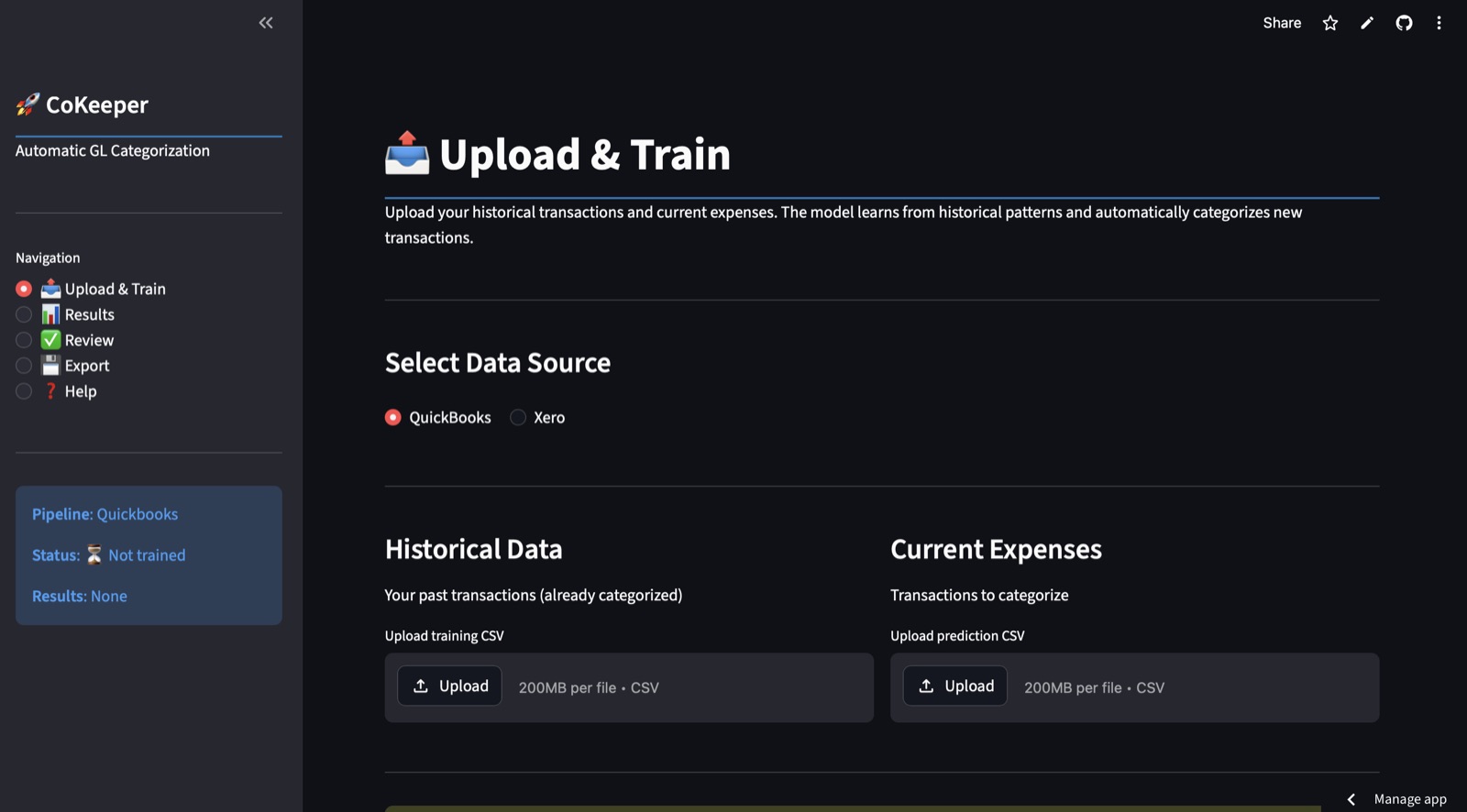
Accountants spend billable hours sorting bank transactions with dirty merchant strings. CoKeeper runs each one through a five-level vendor cascade and a dual-model classifier, then sorts results into green, yellow and red tiers so people only review what needs it.
Read the write-upA Twilio SaaS for solo-operator service businesses. An unanswered call gets a text back within seconds, a follow-up until the job is booked, and a Google review request once it's done.
An autonomous agent on EC2 that sources leads, writes a personal opener for each one, sends on a warmed schedule and watches the inbox. A reply pauses the sequence and goes to a human.
Designed, built and deployed end to end. Performance first, plain HTML, CSS and JS by default. Pintona's stack started here.
A multi-agent system that puts OpenAI and Anthropic models on the same task, routes each subtask to the model that does it best, then merges the results into one execution thread.
Client management and marketing automation built to be resold under other brands: one codebase, many storefronts. It grew out of running Missed-Call Rescue for real clients.
Reviews from Amazon, Shopify, Trustpilot or MercadoLibre become one report: sentiment, the top recurring complaints and praise, and 3 to 5 quantified recommendations. Fixed scope, fixed price.
Snap your clothes, build outfits, get an honest score from Gemini. A vanilla-JS PWA on Firebase in English, Spanish and Vietnamese, installable on iOS and Android.
A Polymarket copy-trader on EC2 that mirrors high-conviction positions from top wallets. Paper trading validated it. Then an exchange-side CLOB order version mismatch rejected every live order.
An ML momentum-rotation strategy on the Nasdaq-100: 126-day lookback, monthly rebalance. CatBoost scores the universe. A crash guard and a sector cap keep the book honest when the regime turns.
Accountants spend billable hours sorting bank transactions with dirty merchant strings. CoKeeper runs each one through a five-level vendor cascade and a dual-model classifier, then sorts results into green, yellow and red tiers so people only review what needs it.
Nothing matches that yet. Try another word or clear the filter.
I'm an AI automation engineer and data scientist based in Puerto Rico. I build the systems in these logs end to end, from the model and the risk checks to the server they run on, and most of them started as a manual task someone was tired of doing. I write each one up because the hard part is rarely the model: it's deciding what the system should do when it isn't sure.
Most projects are one of these, or two stuck together. If yours isn't on the list, ask anyway.
Missed calls texted back, follow-ups sent, review requests out the door. The admin a solo operator never has time for.
Sorting transactions, tickets or documents into categories, with a confidence score on every prediction so you know what to check.
Strategies, screeners and execution bots with hard risk limits written in code and a paper-trading period before any real money.
Claude, OpenAI or Gemini wired into a real process: drafting messages, routing tasks, summarizing. Each call has a fallback for when the API goes down.
A fixed-price ReviewSignal report in 5 to 7 days: what customers complain about, what they love, and what to fix first. English or Spanish.
Fast sites and installable apps without a heavy front-end stack. Nine client sites shipped so far.
A rough estimate using CoKeeper's tier split. Move the sliders to match your month.
A few of the numbers behind the build logs. Use the arrow keys to switch tabs.
Accuracy by confidence tier. The point isn't that every tier is accurate. It's that the model knows which tier it's in, so the 56% predictions never get auto-imported.
What you get from skipping the framework: a vanilla-JS PWA with no bundle to download before the app can start.
Where the ten builds in the log stand right now, counted honestly. Paper-validated means it works but isn't trading real money.
Same order every time. The safety work happens early, not after something has already gone wrong.
I sit with whoever does the task now and write down every decision they make, including the ones they make without thinking about it.
Before writing features, I write down the failures: bad data, a dead API, a wrong prediction that looks confident. Each one gets a check.
One path from input to output, running on real data on a schedule. It's ugly, but it runs every day.
Every output gets a score. Low-confidence results go to a person. Failed calls fall back to something safe and log it.
Paper trades, a review queue or a shadow run next to the manual process, until it meets criteria we agreed on up front.
Alerts on every action and failure, logs you can read, and a write-up like the ones on this page.
A Twilio SaaS for solo-operator service businesses. An unanswered call gets a text back within seconds, a follow-up until the job is...
An autonomous agent on EC2 that sources leads, writes a personal opener for each one, sends on a warmed schedule and watches...
Designed, built and deployed end to end. Performance first, plain HTML, CSS and JS by default. Pintona's stack started here.
A multi-agent system that puts OpenAI and Anthropic models on the same task, routes each subtask to the model that does it...
Client management and marketing automation built to be resold under other brands: one codebase, many storefronts. It grew out of running Missed-Call...
Reviews from Amazon, Shopify, Trustpilot or MercadoLibre become one report: sentiment, the top recurring complaints and praise, and 3 to 5 quantified...
Snap your clothes, build outfits, get an honest score from Gemini. A vanilla-JS PWA on Firebase in English, Spanish and Vietnamese, installable...
A Polymarket copy-trader on EC2 that mirrors high-conviction positions from top wallets. Paper trading validated it. Then an exchange-side CLOB order version...
An ML momentum-rotation strategy on the Nasdaq-100: 126-day lookback, monthly rebalance. CatBoost scores the universe. A crash guard and a sector cap...
Accountants spend billable hours sorting bank transactions with dirty merchant strings. CoKeeper runs each one through a five-level vendor cascade and a...
Placeholder section. Swap these cards for real quotes from clients or collaborators before going live. Delete the section if you don't have any yet.
[Real quote goes here.] One or two sentences on what changed for them after the system shipped.
[Real quote goes here.] Ideally a specific result: hours saved, errors caught, a process that now runs itself.
[Real quote goes here.] A collaborator or teammate on what working with you was like.
[Real quote goes here.] Keep it in their words. Short is fine.
Anything repetitive where the data is a bit messy: categorizing, screening, summarizing, routing. If someone on your team does the same steps every week and hates it, that's usually a good fit.
Yes, so I build for it. Every prediction carries a confidence score, low-confidence results go to a person, and the system logs what it did and why. You decide where the line for "trust it" sits.
Usually not. Most of my work reads from and writes to what you already have: QuickBooks exports, spreadsheets, a Telegram or Discord channel, your database.
In Docker on whatever fits the job: GCP Cloud Run, a small VPS or your own server. You get the code and the deployment setup.
Yes. I'm based in Puerto Rico and work with people anywhere. Calls are on Atlantic Time, which overlaps with US Eastern business hours.
Three quick questions. I'll reply within two working days with whether I can help and what I'd build first.
Your email app should have opened with your answers filled in. Hit send and it reaches me directly. If it didn't open, write to dashakid@live.com.